


 English
 中文简体
中文简体 русский
Industry News
Home / News / Industry News / Vertical & Horizontal Multistage Pump Guide: Efficiency, Selection & Maintenance

Content
A multistage pump is a centrifugal pump in which the fluid passes through two or more impeller stages arranged in series. Each stage adds pressure (head) to the fluid, so the total discharge head of the pump equals the sum of the head contributed by each individual stage. This architecture allows multistage pumps to achieve high pressures that would be impossible with a single impeller without resorting to impractically large diameters or dangerously high rotational speeds.
In a typical multistage design, the outlet of each impeller feeds into a diffuser or return channel that redirects the flow into the inlet of the next stage with minimal turbulence and energy loss. The number of stages can range from two to more than twenty, depending on the required pressure rise. Because the flow rate remains essentially constant across all stages while pressure accumulates, multistage pumps are ideally suited for high-head, moderate-flow applications such as boiler feedwater systems, high-rise building water supply, reverse osmosis, firefighting systems, and industrial process pressurization.
The two dominant configurations for multistage centrifugal pumps are vertical multistage pumps and horizontal multistage pumps. While both achieve high-pressure delivery through staged impellers, they differ significantly in their mechanical layout, installation footprint, priming behavior, maintenance requirements, and optimal application environments. Selecting the right configuration requires a clear understanding of each type's strengths and limitations.
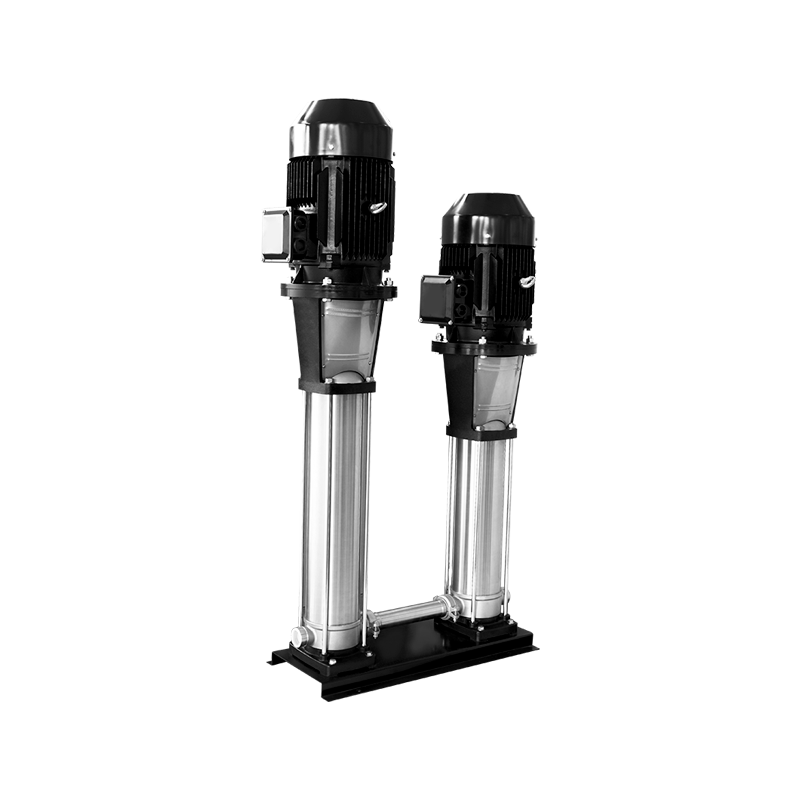
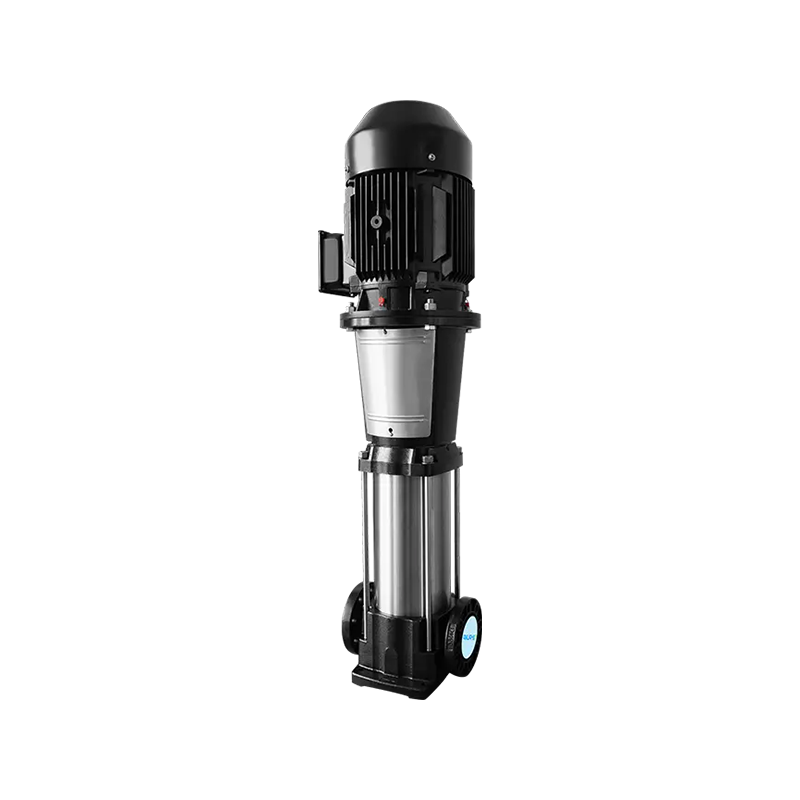
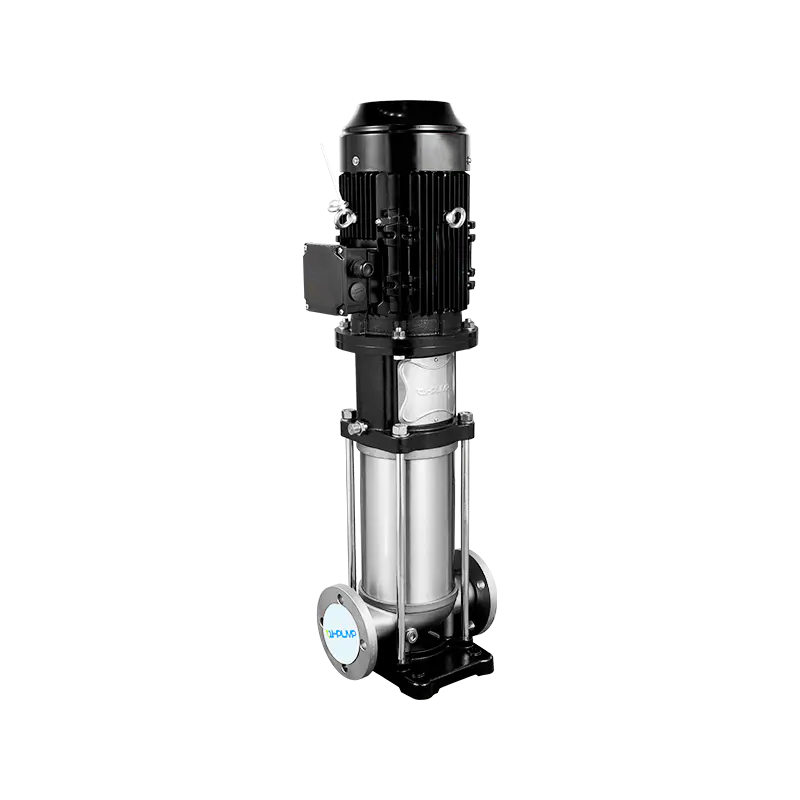
A vertical multistage pump arranges its stages along a vertical shaft, with the pump body oriented upright and the motor mounted directly above. The pump stages are stacked one on top of another within a cylindrical casing, and the entire assembly occupies a compact footprint on the floor. The motor shaft couples directly to the pump shaft, eliminating the need for a separate coupling guard or baseplate in many designs. Suction is typically from the bottom or side, and discharge exits from the upper portion of the pump body.
Most vertical multistage pumps use a close-coupled or inline configuration where the pump and motor share a common shaft or are directly flanged together. The casing is typically made of stainless steel (AISI 304 or 316) or cast iron, with diffusers and impellers machined or cast to tight tolerances. Mechanical seals — either single or double — are used instead of traditional packing glands, which reduces leakage and maintenance frequency. Radial and axial thrust are managed by precision bearings integrated into the motor, and in larger models, by dedicated pump-side bearing brackets.
The vertical orientation means the pump is inherently self-priming in flooded suction installations, as the liquid in the pipeline fills the stages under positive pressure. This makes vertical multistage pumps especially reliable in water supply and pressurization applications where maintaining prime is critical for continuous operation.
Vertical multistage pumps are widely deployed in domestic and commercial water pressure boosting systems, irrigation and agricultural water supply, cooling tower circulation, industrial cleaning systems, membrane filtration and reverse osmosis pre-pressurization, HVAC chilled water systems, and fire suppression networks. Their compact vertical profile and pressure versatility — typically covering heads from 20 to over 600 meters depending on stage count and impeller diameter — make them one of the most flexible pump types in the market.
Efficiency is the central performance criterion for any pump operating continuously or at high duty cycles. In a high efficiency vertical multistage pump, hydraulic, volumetric, and mechanical losses are each minimized through deliberate design choices in impeller geometry, stage diffusion, internal clearances, and motor selection. The overall pump efficiency is the product of these three efficiency components, and improving any one of them yields measurable energy savings over the pump's operating life.
The impeller is the core energy-converting element. In high efficiency vertical multistage pumps, impellers are typically semi-open or closed designs with backward-curved vanes, optimized using computational fluid dynamics (CFD) to minimize recirculation losses and flow separation across the operating range. Diffusers are designed with precisely calculated throat areas and divergent angles to convert kinetic energy into pressure with minimal turbulent dissipation. Leading manufacturers now achieve stage hydraulic efficiencies above 80% for standard water service, with peak efficiencies approaching 85–88% in premium designs.
Surface roughness of the wetted hydraulic passages also plays a significant role. Casting or machining impellers and diffusers to a surface finish of Ra ≤ 3.2 µm reduces skin friction losses noticeably at higher flow velocities, contributing to measurable efficiency gains over standard-finish components.
Volumetric losses occur when pressurized fluid leaks back from the high-pressure side of each stage to the suction side through the running clearances between the impeller wear rings and the casing. In a high efficiency vertical multistage pump, these clearances are held to tight manufacturing tolerances — typically 0.15–0.25 mm diametrically — and wear ring materials are selected for durability. Stainless steel wear rings running against bronze or hardened steel maintain tighter clearances over the pump's service life compared to softer materials that wear rapidly and allow increasing internal recirculation.
For a truly high efficiency vertical multistage pump system, the motor efficiency class matters as much as the hydraulic design. IE3 (Premium Efficiency) and IE4 (Super Premium Efficiency) motors are now the standard for new installations in the European Union and increasingly mandated in other markets. Pairing the pump with a variable frequency drive (VFD) is arguably the single most impactful efficiency improvement for systems with variable demand, as pump power consumption follows the affinity laws — reducing speed by 20% cuts power consumption by nearly 50%. Modern high efficiency pump packages integrate VFD control, pressure transducers, and PLC logic into a single skid-mounted unit that automatically adjusts pump speed to maintain a constant system pressure setpoint.
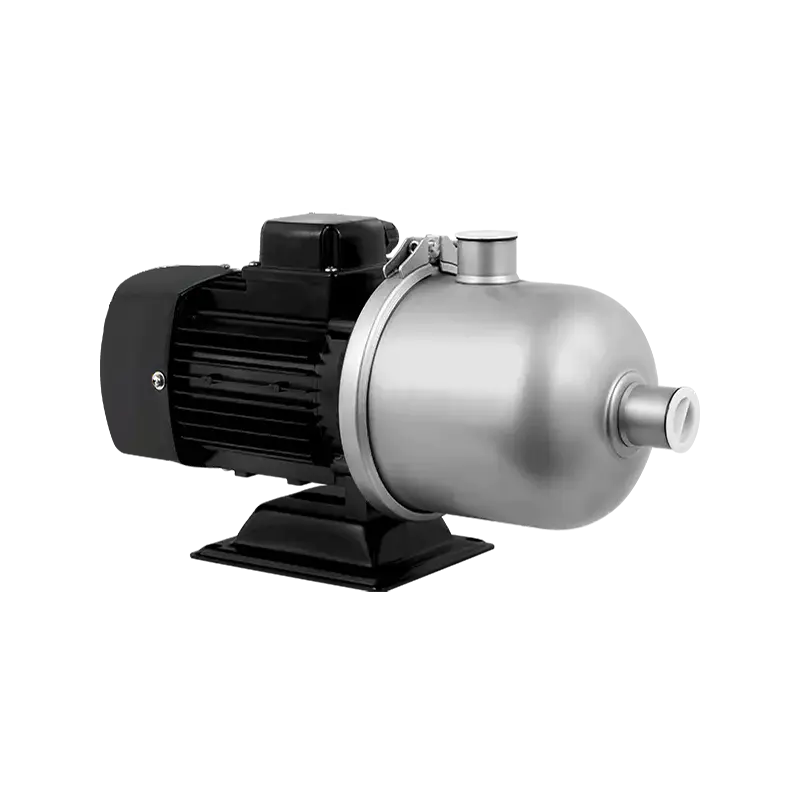
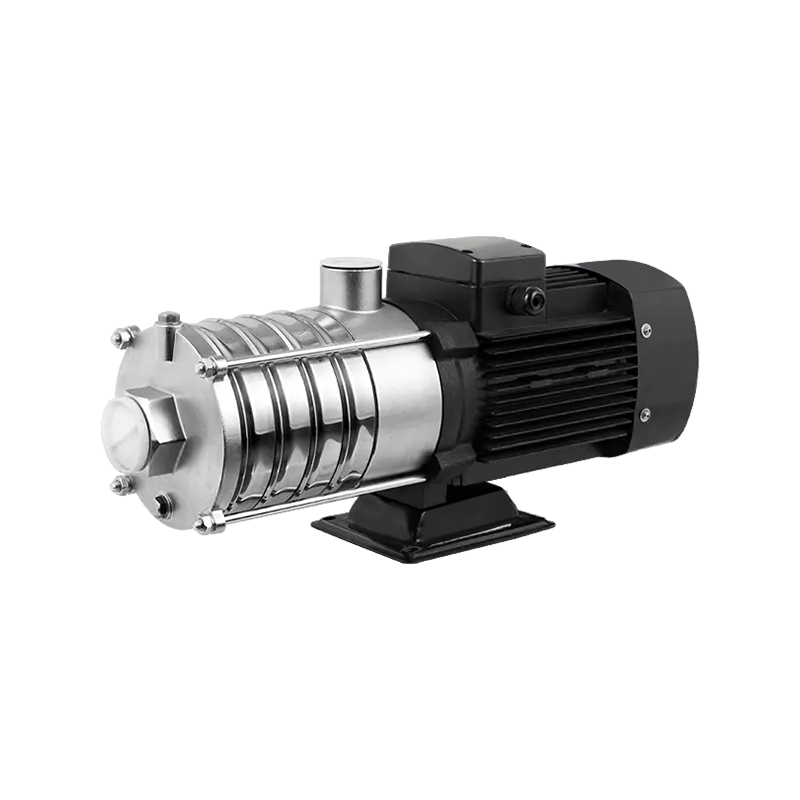
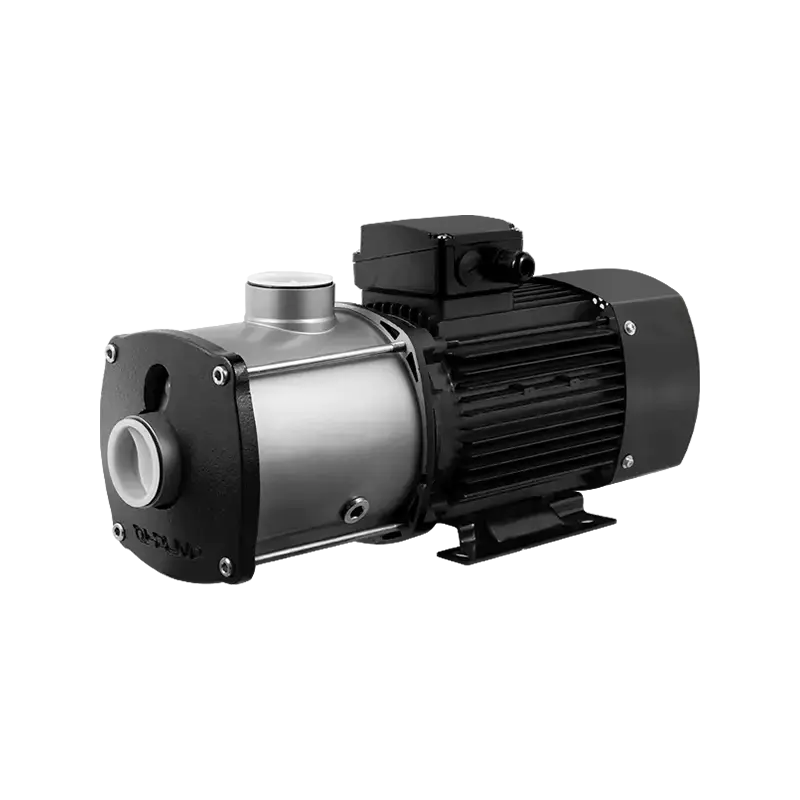
A horizontal multistage pump arranges its stages along a horizontal shaft, with the pump casing oriented lengthwise and the motor mounted at one end, connected via a flexible coupling and a common baseplate. The stages are typically arranged in a back-to-back or in-line configuration within a barrel or segmental casing to balance axial thrust forces generated by the pressure differential across each impeller. Horizontal multistage pumps are available in a much wider range of sizes than vertical multistage pumps, extending from small process pumps producing 50 meters of head to large boiler feedwater pumps delivering over 3000 meters of head at flow rates of hundreds of cubic meters per hour.
Horizontal multistage pumps come in two principal casing configurations. In a segmental (or ring-section) design, the pump casing is built up of individual stage sections bolted together axially, making it straightforward to add or remove stages. This design is used for medium-pressure applications and is well suited to clean water service in irrigation, water treatment, and HVAC systems. In a barrel (or double-casing) design, the stage stack is enclosed within an outer pressure casing, which contains the full discharge pressure. This construction is mandatory for high-pressure service above approximately 100 bar and is the dominant design for boiler feedwater pumps, pipeline booster stations, and high-pressure industrial process pumps where containment integrity under pressure is paramount.
Managing axial thrust is one of the most critical engineering challenges in horizontal multistage pump design. Each impeller generates axial thrust directed toward the suction side due to the pressure differential across the impeller. In a multi-stage arrangement, these forces accumulate and can place enormous loads on the thrust bearing if not counterbalanced. The most common solutions include back-to-back impeller arrangement (where impellers face opposing directions so thrust partially self-cancels), balance drums or balance discs (hydraulic devices that generate a counteracting thrust force), or a combination of both. Precision double-acting thrust bearings are always included as a final safety measure. Proper axial thrust management is directly related to pump reliability and bearing service life — poorly balanced thrust is one of the leading causes of premature bearing and seal failure in horizontal multistage pumps.
Choosing between a vertical multistage pump and a horizontal multistage pump is not always straightforward. Both can cover overlapping pressure and flow ranges, and both are offered in high efficiency configurations. The decision typically comes down to installation constraints, fluid type, required flow rate, maintenance philosophy, and capital cost. The table below provides a structured comparison of the most relevant selection criteria:
| Selection Criterion | Vertical Multistage Pump | Horizontal Multistage Pump |
| Floor Space Required | Very small (compact footprint) | Larger (extended baseplate) |
| Ceiling Height Required | Greater (vertical stack + motor) | Minimal |
| Typical Max Head | Up to ~600 m | Up to 3000+ m |
| Typical Max Flow Rate | Up to ~500 m³/h | Up to several thousand m³/h |
| Maintenance Access | Overhead lift required for disassembly | Easy lateral access, no lifting needed |
| Priming | Self-priming (flooded suction) | Requires priming or foot valve |
| Vibration Level | Low (rigid vertical structure) | Low-moderate (baseplate dependent) |
| Alignment Complexity | Simple (close-coupled direct drive) | Requires precision shaft alignment |
| Fluid Temperature Range | Typically up to 120°C (standard) | Up to 250°C+ (boiler feedwater) |
| Capital Cost | Lower for small-medium sizes | Higher; justified at large scale |
Whether specifying a vertical multistage pump or a horizontal multistage pump, engineers must define a complete set of hydraulic and mechanical parameters to ensure the selected pump meets both the duty point and the broader system requirements. Incomplete specifications are one of the most common causes of pump underperformance, cavitation, and premature failure. The following parameters must be clearly established before pump selection:
Multistage pumps are more mechanically complex than single-stage designs due to the number of impellers, wear rings, interstage bushings, and sealing surfaces involved. A structured maintenance program focused on the most common failure modes significantly extends service intervals and prevents costly unplanned shutdowns.
Continuous or periodic monitoring of key operating parameters provides early warning of developing faults. Bearing vibration monitoring (using accelerometers or portable vibration analyzers measuring ISO 10816 velocity values) detects rotor imbalance, misalignment, and bearing defects before they cause catastrophic failure. Bearing temperature monitoring — with alarm setpoints typically 20–30°C above the baseline operating temperature — provides an early warning of inadequate lubrication or excessive loading. For pumps in critical service, differential pressure across the pump and comparison against the original performance curve reveals internal wear through increased internal leakage (volumetric loss) over time.
Mechanical seals are the most maintenance-intensive component of any multistage pump. In vertical multistage pumps with close-coupled motors, seal replacement may require partial disassembly of the motor-pump assembly, so seals should be inspected at each planned overhaul and replaced proactively rather than reactively. Seal faces should be inspected for heat checking, blister marks, or chipping. The seal O-rings and secondary sealing elements should be replaced with every seal service, even if they appear visually intact, as elastomers degrade with heat cycling and chemical exposure regardless of visible condition.
Wear rings are the most wear-prone internal clearance component in a multistage pump. As wear ring clearances increase through erosion, internal recirculation grows, reducing both flow output and efficiency. A useful rule of thumb is that when wear ring clearances reach twice the original design clearance, it becomes economically worthwhile to restore the pump to original tolerances through wear ring replacement. For a pump that was originally achieving 82% efficiency, doubling the wear ring clearance may reduce efficiency to 75–78%, significantly increasing energy costs over a full operating year. Tracking differential pressure and flow rate against the original performance curve at each annual maintenance allows wear ring degradation to be quantified objectively.
The pump industry is increasingly shaped by energy efficiency regulations aimed at reducing the electricity consumption of pump systems, which collectively account for approximately 20% of global industrial electricity use. Engineers specifying vertical multistage pumps and horizontal multistage pumps must now account for regulatory requirements in addition to hydraulic performance when making selection decisions.
In the European Union, the Energy-related Products (ErP) Directive regulation EU 547/2012 establishes minimum efficiency index (MEI) requirements for water pumps, requiring MEI ≥ 0.40 for clean water end-suction and multistage pumps placed on the market. The United States Department of Energy (DOE) has established pump efficiency standards under 10 CFR Part 431, defining minimum efficiency levels for clean water pumps based on specific speed and flow rate categories. In both markets, premium efficiency motors (IE3 minimum, IE4 preferred for continuously operating pumps) are required or strongly incentivized by utility rebate programs.
Beyond regulatory compliance, lifecycle cost analysis (LCA) consistently demonstrates that energy costs dominate the total cost of ownership for pumps operating more than 2000 hours per year. A high efficiency vertical multistage pump with a 3% efficiency advantage over a standard model typically recoups the price premium within 12–24 months of operation at full load, and delivers compounding savings over a 15–20 year service life. Specifying on purchase price alone — without considering efficiency, reliability, and maintenance cost — routinely results in significantly higher total lifecycle expenditure.
It is focused on the overall solution of dry bulk material port transfer system,
research and development, manufacturing, and service
 Factory Area 5-6, No. 1118 Xin'an Road, Nanxun Town, Huzhou City, Zhejiang Province
 +86-4008117388
 [email protected]
Copyright © Zhejiang Zehao Pump Industry Co., Ltd. All Rights Reserved. Stainless Steel Multistage Centrifugal Pumps Manufacturers




 English