


 English
 中文简体
中文简体 русский
Industry News
Home / News / Industry News / Classic Vertical Pump: Compact Multi-Stage Design for High-Lift Applications

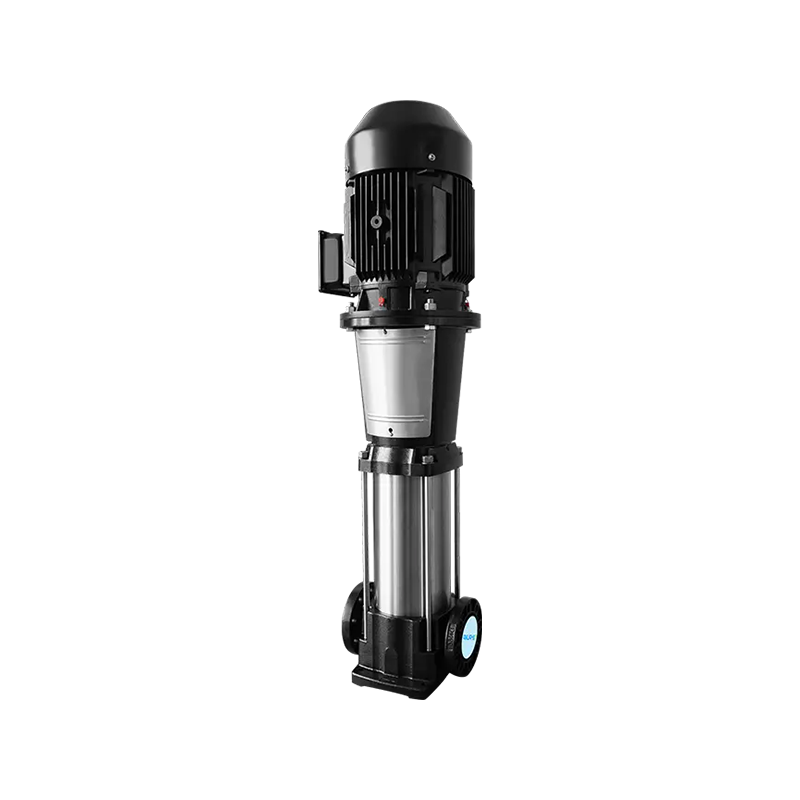
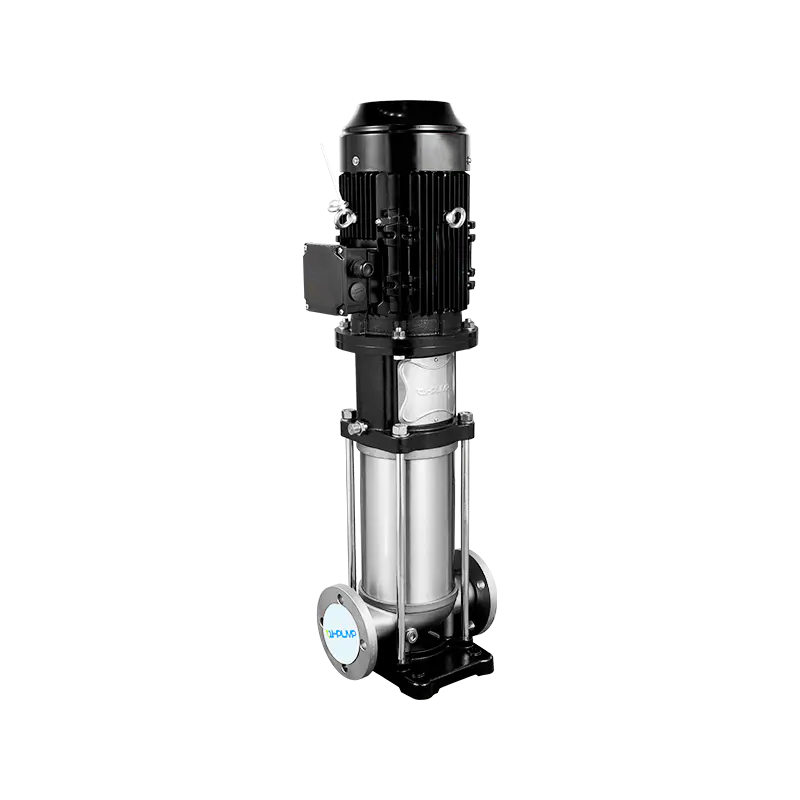
A classic vertical pump solves the space constraint problem that horizontal centrifugal pumps cannot address: it delivers high-pressure, stable flow from a footprint that can be as small as 0.3 square meters. The vertical orientation stacks multiple impeller stages along a common shaft, generating head pressures that a single-stage pump of comparable size could never achieve. For an engineer specifying equipment for a booster station inside an existing building or a water treatment plant with limited floor area, the vertical multi-stage configuration is not merely an option; it is often the only pump architecture that fits the available envelope while meeting the system curve. The ZHL and ZHLF light vertical multi-stage series, along with the ZHLF+ZHG high-pressure series, represent refined versions of this classic design, balancing hydraulic efficiency with installation practicality across municipal, agricultural, and industrial applications.
Content
The defining characteristic of a classic vertical pump is the stacking of impellers and diffusers along a vertical shaft, with the motor mounted on top of the pump head. Each impeller-diffuser pair constitutes one stage, and the total head produced by the pump is approximately the head per stage multiplied by the number of stages. A pump with five stages each producing 10 meters of head delivers roughly 50 meters of total dynamic head. This modularity means that the same basic hydraulic design can cover a wide performance range simply by adding or removing stages, changing the impeller diameter, or adjusting the motor speed. The vertical shaft passes through a series of bearings, typically lubricated by the pumped liquid itself in the case of water-service pumps, eliminating the need for an external oil lubrication system and the associated maintenance access points. The suction and discharge flanges are arranged in-line, meaning the pipe connections share the same vertical axis, which simplifies piping layout and reduces the number of elbows and fittings required to connect the pump to the system.
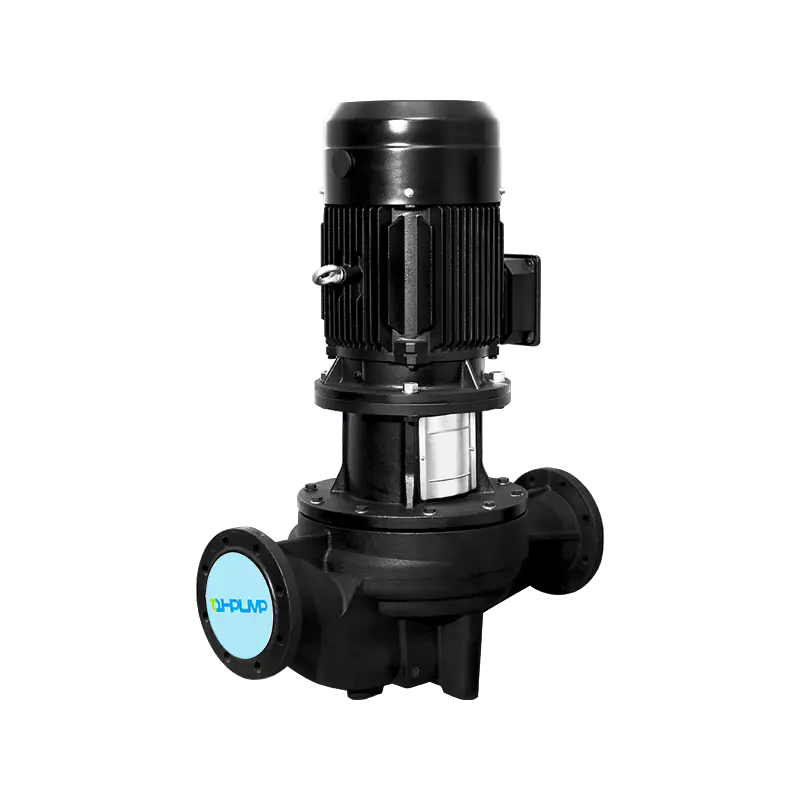
The space-saving geometry of a vertical inline pump is its most immediately appreciated feature. A horizontal pump of equivalent hydraulic capacity requires a baseplate, a coupling guard, and clearance around the motor for airflow and maintenance access. This assembly can occupy two to three times the floor area of a vertical pump with the same motor power. The vertical pump's motor sits directly above the hydraulic section, and the entire unit mounts between pipe flanges, supported by the pipe system itself rather than a dedicated concrete foundation. This in-line mounting eliminates the costly civil work of pouring and curing a pump base, aligning the motor and pump shafts with dial indicators, and grouting the baseplate—a process that can add three to five days to a horizontal pump installation. For a retrofit project where downtime must be measured in hours, not days, the vertical pump's ability to be lifted into position, bolted between existing flanges, and wired in a single shift is a decisive operational advantage.
The classic vertical pump employs a highly refined hydraulic model where the impeller and diffuser profiles are optimized using computational fluid dynamics to minimize flow separation, recirculation, and turbulence losses. Each diffuser converts the velocity energy imparted by the impeller into pressure energy and guides the flow smoothly into the suction eye of the next stage. This staged energy conversion achieves overall hydraulic efficiencies in the range of 75% to 85% for the ZHL series at the best efficiency point, depending on the specific speed and the number of stages. The efficiency curve is relatively flat across a broad flow range, so the pump does not penalize operation at slightly off-design flow rates with a sharp drop in efficiency. Flow output remains continuous and free of the pulsation that characterizes positive displacement pumps, making the vertical multi-stage centrifugal pump suitable for applications where pressure surges could damage downstream equipment, such as membrane filtration systems or boiler feed water lines.
| Pump Series | Configuration | Flow Range | Typical Application |
|---|---|---|---|
| ZHL / ZHLF | Light vertical multi-stage | 1–120 m³/h | Building water supply, light industrial |
| ZHLF + ZHG | High-pressure vertical multi-stage | 2–240 m³/h | High-rise booster, industrial cooling, irrigation |
The classic vertical pump is not restricted to clean water. Material choices for the impellers, diffusers, shaft, and casing adapt the same hydraulic platform to aggressive, corrosive, or solids-laden liquids. The standard construction for clean water service uses AISI 304 stainless steel for the impellers, diffusers, and shaft, with a cast iron or fabricated steel pump head and base. This combination provides adequate corrosion resistance for potable water, cooling tower water, and treated effluent at a moderate cost. When the pump must handle sewage, wastewater with suspended solids, or chemically aggressive industrial fluids, the material specification upgrades. Impellers and diffusers in AISI 316L stainless steel resist chloride pitting in brackish water or chemical solutions. For highly corrosive acids or alkalis, duplex stainless steel or even titanium impellers can be specified, though the cost premium is significant and is only justified when process requirements demand it. The shaft seals and gaskets must match the chemical environment: EPDM elastomers for potable water and mild chemicals, Viton for hydrocarbon contamination, and PTFE encapsulated seals for strong oxidizing agents.
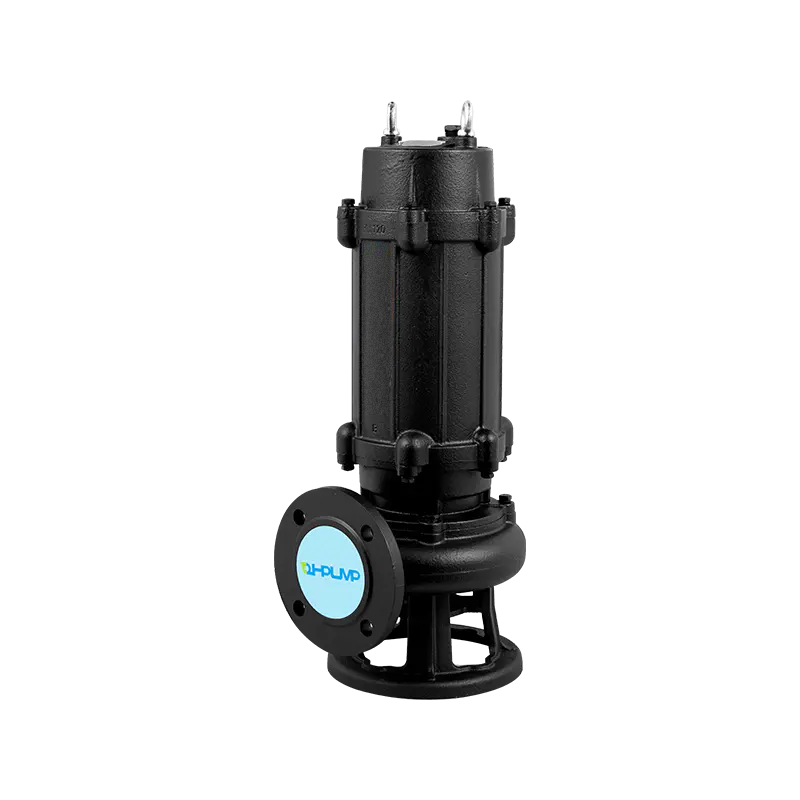
In sewage treatment applications, the vertical multi-stage pump faces the challenge of passing solid particles without clogging the narrow impeller passages. The ZHL series designed for wastewater incorporates impellers with wider vane passages and a non-clogging vane profile that allows spherical solids up to a defined diameter to pass through. The pump casing includes clean-out ports positioned to allow access to each stage without fully disassembling the stack, a maintenance feature that reduces downtime when a rag or fibrous material inevitably becomes lodged. For raw sewage lift stations, a vertical configuration with the hydraulic section submerged in the wet well eliminates the suction lift limitation of a dry-mounted horizontal pump and avoids the priming problems that plague self-priming pumps in intermittent service.
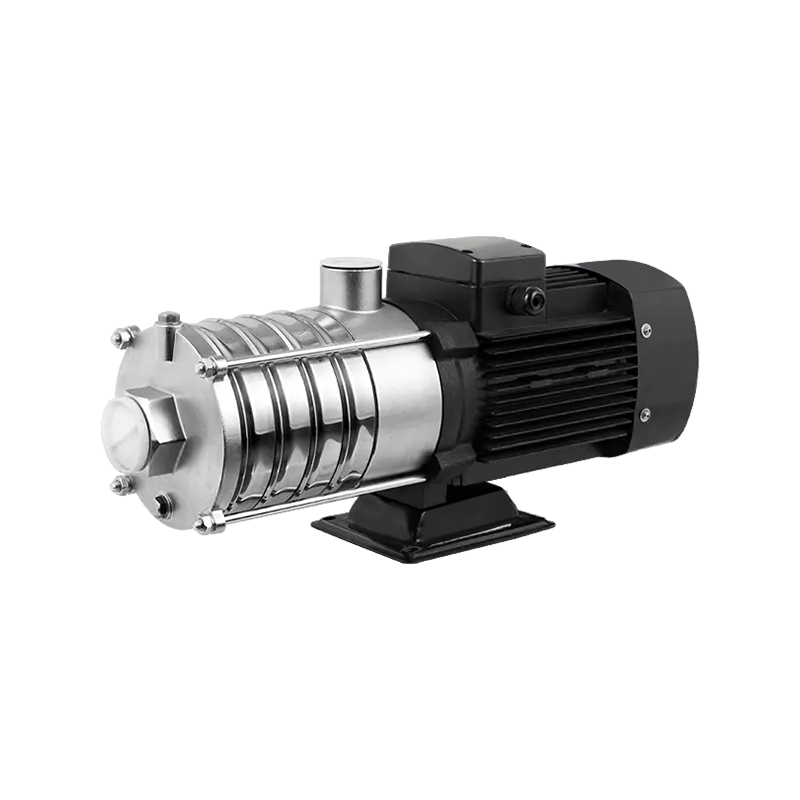
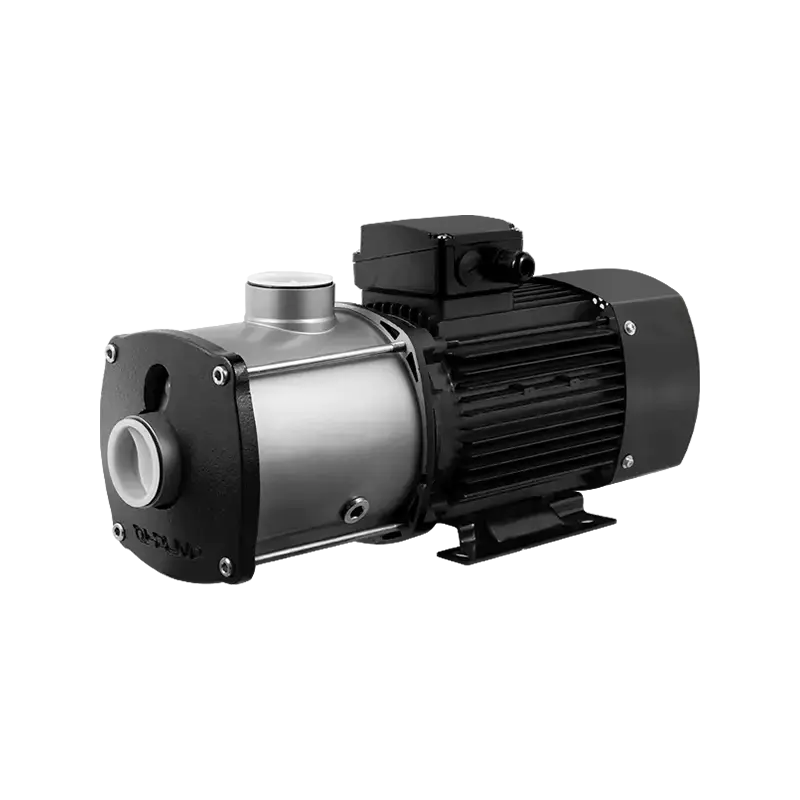
The ZHL series serves the core market for building water supply, light industrial pressure boosting, and municipal water distribution where the total dynamic head requirement falls in the 20 to 160 meter range. The pump components—impellers, diffusers, shaft, and outer sleeve—are manufactured from pressed stainless steel sheet, a construction method that reduces weight compared to cast components and allows the use of thinner, hydrodynamically efficient vane profiles. The ZHLF variant adds a frequency converter compatibility feature: the motor mounting flange accepts IEC standard motors with independent cooling fans, so the pump can be operated at variable speed without overheating the motor at low RPM. This variable-speed capability is central to modern building pressure boosting, where the pump speed modulates to match demand rather than cycling on and off against a pressure tank. A ZHLF pump controlled by a variable frequency drive can maintain discharge pressure within ±0.1 bar of setpoint even as building demand fluctuates from a single tap running to all risers open, eliminating the pressure swings that cause temperature shocks in showers and pipe hammer in the distribution system.
When the application requires heads beyond the capability of a single ZHL pump, the ZHLF+ZHG combination pairs a standard ZHLF as the first-stage booster feeding into a ZHG high-pressure pump. The ZHG series is engineered for discharge pressures up to 40 bar and beyond, achieved through a thicker outer sleeve, reinforced bearing brackets, and a higher-strength shaft material. The impellers in the high-pressure stages use a shrouded design with tighter running clearances, which improves volumetric efficiency at the expense of requiring cleaner inlet fluid. This series finds application in high-rise building water supply for structures exceeding 100 meters in height, where the static head alone approaches 10 bar and friction losses through the riser piping add several additional bars of resistance. Industrial applications include boiler feed water pumps that must inject water into a steam drum already pressurized to 20 or 30 bar, and reverse osmosis membrane feed pumps where the high pressure forces water through the membrane elements against osmotic pressure. In agricultural irrigation on hilly terrain, the ZHLF+ZHG combination pushes water from a valley-floor source to sprinkler systems on elevated plateaus, a lift that may exceed 300 meters of head in some geographical settings.
The versatility of the classic vertical pump platform is demonstrated by its penetration across fundamentally different engineering sectors. Each application imposes a unique combination of duty cycle, fluid condition, and reliability expectation that tests a different aspect of the pump's design.
In commercial and residential buildings, vertical multi-stage pumps serve as pressure boosters that lift municipal water from ground-level storage tanks to rooftop reservoirs or directly into the pressurized riser system. A typical installation for a 20-story office tower might use three ZHLF pumps in a duty-assist-standby configuration, each sized for 60% of peak demand flow. The variable-speed control adjusts the running pump's speed based on a pressure transducer on the discharge header. When demand exceeds the capacity of one pump, the second pump starts and the two operate in parallel, a control strategy that keeps each pump running near its best efficiency point for the maximum number of operating hours. The vertical configuration places the suction connection low on the pump, drawing from a break tank at floor level, and discharges upward into the building riser, aligning the pump's natural flow direction with the system piping and avoiding the energy-wasting change of direction that a horizontal pump installation would require.
Agricultural irrigation demands pumps that deliver high volumes at moderate to high heads over extended continuous runs during the growing season. The classic vertical pump serves center-pivot and drip irrigation systems where the water source is a canal, reservoir, or deep well. A vertical multi-stage pump installed in a well casing or a sump can lift water from depths of 30 to 80 meters and pressurize it to the 3 to 6 bar required at the irrigation distribution header. The vertical orientation is particularly advantageous in well applications because the entire pump assembly is lowered into the casing, with only the discharge head and motor visible above ground. This minimizes the surface infrastructure footprint in the field and protects the pump from weather, vandalism, and freezing temperatures. The stainless steel construction of the ZHL series resists the abrasive wear caused by the fine silt suspended in river and canal water, a common challenge in agricultural water sources that rapidly erodes cast iron pump casings.
Industrial cooling cycles circulate water or water-glycol mixtures through heat exchangers, condensers, and process equipment jackets. The vertical inline pump integrates into the pipe rack with minimal pipe modifications, a significant advantage in congested industrial plants where floor space is occupied by production machinery. The pump's ability to handle liquids at temperatures up to 120°C with the appropriate high-temperature seal configuration makes it suitable for hot water return loops and condensate recovery systems. In wastewater treatment plants, vertical multi-stage pumps transfer treated effluent to filtration systems, feed chemical dosing skids with consistent pressure, and supply wash water to belt filter presses and drum thickeners. The commonality of parts across the ZHL and ZHLF series reduces the spare parts inventory that a plant maintenance department must stock; a single impeller, diffuser, and bearing kit serves multiple pump sizes within the same series, simplifying procurement and reducing the working capital tied up in spare parts.
The vertical stacked design offers a maintenance pathway that horizontal pumps cannot match. Because the motor sits on top and the hydraulic stages are suspended below, a technician can service the rotating assembly without disconnecting the pump casing from the pipework. The process involves removing the motor, unbolting the pump head, and lifting the entire shaft-impeller assembly out of the outer sleeve as a single cartridge. This cartridge extraction method reduces the time required to replace worn impellers or shaft bearings from a full day to approximately two hours, assuming the replacement cartridge is pre-assembled and ready on site. The pump casing remains in place, the flanges remain bolted, and the system does not require draining beyond isolating the pump suction and discharge valves. For a building water supply pump that serves hospital wards or hotel rooms, this maintenance speed translates directly to an acceptable maintenance window: the work can be completed during a scheduled low-demand period without the building losing water pressure. The cartridge design also standardizes the overhaul procedure, reducing the skill level required for pump repair and making the outcome less dependent on the individual technician's experience with that specific pump model.
The classic vertical pump demonstrates stable operation at both extremes of its operating envelope. At high lift, meaning a system curve that demands substantial head at relatively low flow, the multi-stage design maintains efficiency because each stage operates within its optimized specific speed range. A ZHLF pump delivering 10 m³/h against 150 meters of head might use eight stages, each contributing approximately 19 meters. No single impeller is being forced outside its hydraulic comfort zone, so vibration remains low and the NPSH requirement at each stage inlet is satisfied. At large flow, the ZHLF+ZHG combination distributes the flow across multiple pumps operating in parallel rather than forcing a single oversized pump to operate far to the right of its best efficiency point, where cavitation damage and shaft deflection become risks. The modular nature of the vertical multi-stage platform—add stages for more head, add pumps in parallel for more flow—gives the system designer a matrix of options to match the pump configuration precisely to the system's hydraulic requirement without accepting the compromises that come from selecting a pump from a limited catalog of discrete sizes.
A pump's competitiveness is measured by its total cost of ownership over a 15 to 20 year service life, not by its initial purchase price alone. The classic vertical pump's competitive advantage emerges from three lifecycle factors. Energy consumption dominates the lifecycle cost, typically accounting for 70% to 85% of the total expenditure over the pump's life. The high hydraulic efficiency of the ZHL and ZHLF series, sustained by the cartridge replacement program that restores original clearances at each overhaul interval, keeps energy costs near the theoretical minimum. Maintenance labor and parts constitute the second-largest cost category, and the cartridge extraction design reduces both by simplifying the repair procedure and standardizing the replacement components. Downtime cost, the third factor, is application-specific but can be substantial: a sewage lift station out of service for a day risks environmental discharge violations, and a hospital water booster out of service risks clinical hygiene failures. The vertical pump's rapid serviceability directly mitigates this risk. Taken together, these factors position the classic vertical multi-stage pump as a financially rational choice even when the initial capital cost exceeds that of a horizontal competitor, because the operating savings compound annually and the risk reduction protects against the high cost of unexpected failure.
It is focused on the overall solution of dry bulk material port transfer system,
research and development, manufacturing, and service
 Factory Area 5-6, No. 1118 Xin'an Road, Nanxun Town, Huzhou City, Zhejiang Province
 +86-4008117388
 [email protected]
Copyright © Zhejiang Zehao Pump Industry Co., Ltd. All Rights Reserved. Stainless Steel Multistage Centrifugal Pumps Manufacturers





 English