


 English
 中文简体
中文简体 русский
Vertical Multistage Centrifugal Pumps Guide
Content
- 1 How Vertical Multistage Centrifugal Pumps Generate High Pressure
- 2 Compact Structure and Installation Advantages
- 3 Liquid Media Compatibility and Material Selection
- 4 Primary Application Fields and Operating Conditions
- 5 ZHL/ZHLF and ZHLF+ZHG Model Configurations Explained
- 6 Operational Best Practices to Extend Service Life
How Vertical Multistage Centrifugal Pumps Generate High Pressure
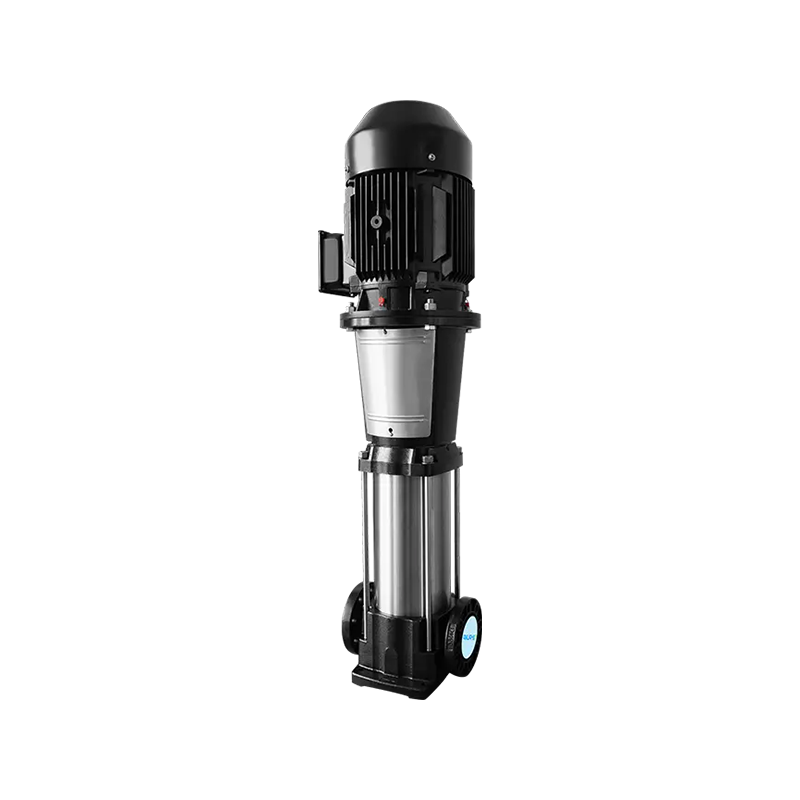
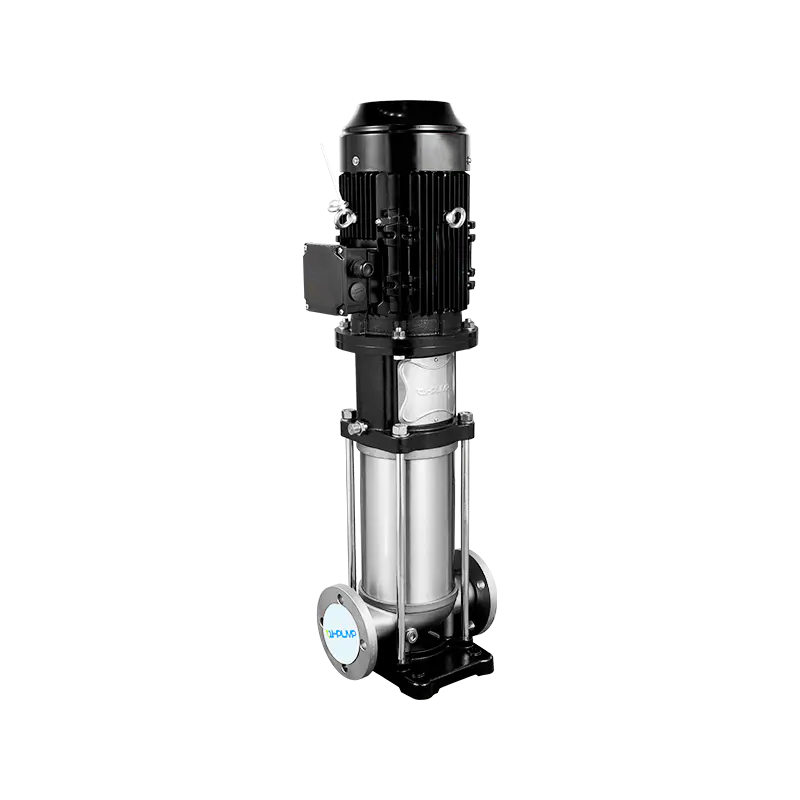
A vertical multistage centrifugal pump achieves high discharge pressure by passing fluid through a series of impellers arranged in sequence along a single vertical shaft. Each impeller stage adds kinetic energy to the liquid, which is then converted into pressure as the fluid decelerates through a diffuser or guide vane. Because pressure is built incrementally across multiple stages rather than in a single impeller, the pump can generate heads that would be mechanically impossible or structurally impractical in a single-stage design.
The vertical orientation of the shaft brings specific engineering advantages. It eliminates the need for horizontal floor space along the pump axis, reduces the risk of dry-running caused by insufficient suction priming, and allows the motor to sit directly above the pump casing — creating a compact, vertically integrated unit. This arrangement also simplifies shaft sealing, since the seal faces a consistent fluid pressure environment rather than the variable suction conditions seen in horizontal configurations.
The hydraulic model used in modern vertical multistage pumps is typically optimized through computational fluid dynamics simulation to minimize internal recirculation losses, reduce turbulence at the impeller inlet, and maintain a stable operating curve across a wide flow range. The result is a pump that delivers stable and continuous flow output without pressure surging — a critical requirement in systems where downstream equipment depends on consistent supply pressure.
Compact Structure and Installation Advantages
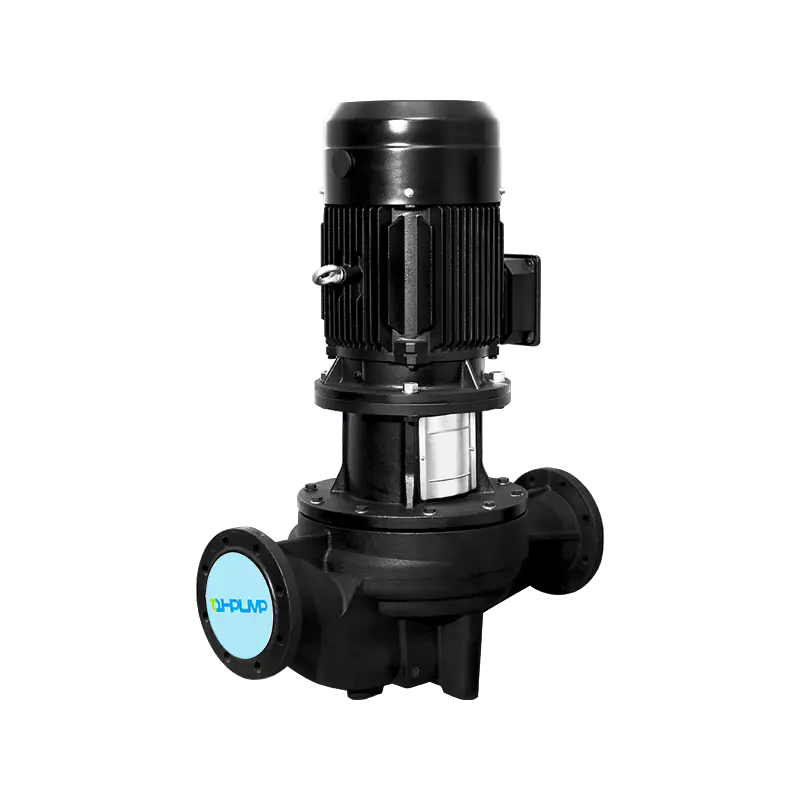
One of the defining characteristics of the vertical multistage centrifugal pump is its compact structure and small footprint. Unlike horizontal split-case or end-suction pumps that require substantial floor area and dedicated pump rooms, vertical multistage units can be installed in confined spaces such as equipment shafts, basement corners, or rooftop plant rooms. The inline configuration — where suction and discharge ports are aligned on the same pipe axis — allows the pump to be inserted directly into an existing pipeline without rerouting or offset piping.
Installation is further simplified by the self-supporting design. The pump casing carries its own weight through the pipe flanges, eliminating the need for a separate base frame or grouted foundation in many applications. This reduces civil works cost and shortens commissioning time, which is particularly valuable in retrofit projects or fast-track construction schedules. Maintenance access is equally straightforward — the mechanical seal and impeller stack can be serviced from the top without disturbing the pipe connections, making it easy to install and maintain even when access is restricted.
Liquid Media Compatibility and Material Selection
Vertical multistage centrifugal pumps are suitable for transporting a wide range of liquid media, and material selection is the primary factor that determines media compatibility. The base configuration — typically 304 or 316 stainless steel wetted parts — covers the majority of clean water applications. For more aggressive services, material upgrades are required to match the chemical resistance profile of the fluid being handled.
| Liquid Media | Recommended Wetted Material | Key Consideration |
|---|---|---|
| Clean water / potable water | 304 stainless steel | NSF/food-grade seal required for drinking water |
| Sewage / wastewater | 316 stainless steel or cast iron | Impeller clearance must accommodate suspended solids |
| Corrosive liquids (mild acids/alkalis) | 316L SS or duplex stainless steel | Check chloride content to prevent stress corrosion |
| High-temperature water (boiler feed) | Carbon steel or alloy steel | Seal and bearing cooling required above 80°C |
Beyond metallic materials, the mechanical seal elastomers must also be matched to the fluid. EPDM seals perform well in water and many dilute chemical services, while Viton (FKM) is preferred for hydrocarbon-adjacent or higher-temperature applications. Specifying the wrong seal compound is one of the most common causes of premature seal failure in chemical and industrial cooling services.
Primary Application Fields and Operating Conditions
Vertical multistage centrifugal pumps are deployed across a broad spectrum of industries and infrastructure systems. Their ability to generate high head in a compact form factor makes them the default choice wherever pressure boosting or high-lift delivery is required. The following application fields represent the most prevalent use cases:
- Building water supply and drainage: High-rise buildings require pressure-boosting pump sets to maintain adequate supply pressure on upper floors. Vertical multistage units are preferred because they fit within standard riser shafts and can be arranged in parallel for redundancy without consuming additional footprint.
- Urban water supply: Municipal distribution networks use vertical multistage pumps at booster stations to maintain network pressure across extended pipe runs. Variable-frequency drive (VFD) control allows the pump to modulate output in response to real-time demand, reducing energy consumption during off-peak periods.
- Agricultural irrigation: In drip and sprinkler irrigation systems, consistent supply pressure is essential for even water distribution. Vertical multistage pumps serving irrigation networks must handle variable flow demands seasonally and maintain pressure stability across large field areas.
- Sewage treatment: Transfer and dosing stages within treatment plants require pumps that can handle mildly contaminated water under consistent pressure. The corrosion-resistant materials used in vertical multistage designs extend service life in these chemically active environments.
- Industrial cooling cycles: Closed-loop and open-circuit cooling systems in manufacturing and power generation facilities rely on high-head pumps to circulate coolant through heat exchangers and tower circuits. Stable flow is critical to preventing thermal overload in downstream process equipment.
ZHL/ZHLF and ZHLF+ZHG Model Configurations Explained
The ZHL and ZHLF series represent the light vertical multistage centrifugal pump configuration, engineered for applications where moderate head and flow are required within a compact envelope. The ZHLF variant introduces a fully stainless steel wetted-path construction, making it directly suitable for corrosive liquid service without material upgrades. These models cover the majority of building services, light industrial, and agricultural irrigation applications where operating pressures fall within standard ranges.
For demanding high-pressure applications, the ZHLF+ZHG combination extends the operating envelope significantly. The ZHG stage group adds additional high-pressure impeller stages to the base ZHLF platform, enabling the pump to achieve discharge pressures required for high-rise building booster service, long-distance pipeline delivery, or industrial process applications operating under elevated system back-pressure. Whether operating in high-lift or large-flow conditions, this configuration performs stably across its rated curve without instability or surge.
Selecting Between Light and High-Pressure Configurations
The decision between ZHL/ZHLF and ZHLF+ZHG models should be based on a system curve analysis rather than pump nameplate data alone. Plotting the system resistance curve — accounting for static head, friction losses through piping, fittings, and valves, and any downstream pressure requirements — against the pump performance curve identifies the operating point. If the required head at the design flow rate falls within the ZHL/ZHLF envelope, the lighter model is the cost-effective choice. If the system curve intersects at a higher head, the ZHLF+ZHG configuration is required to ensure the pump operates near its best efficiency point (BEP) and maintains reliable power support for various engineering projects.
Operational Best Practices to Extend Service Life
Even a well-selected vertical multistage centrifugal pump will underperform or fail prematurely if operated outside its design envelope or without adequate monitoring. Following established operational practices protects both the pump and the wider system.
- Avoid sustained operation at minimum flow: Running the pump at very low flow causes recirculation heating and axial thrust imbalance. Install a minimum flow bypass line or recirculation valve if the system regularly demands flow below 30% of the rated point.
- Monitor mechanical seal condition: The mechanical seal is the highest-wear consumable in a vertical multistage pump. Inspect for leakage at each scheduled maintenance interval and replace before failure to prevent fluid ingress into the motor bearing housing.
- Check inlet strainer regularly: Partial blockage of the suction strainer reduces available NPSH, risking cavitation damage to the first-stage impeller. Clean or replace strainer elements on a schedule tied to actual system contamination levels.
- Verify motor current against nameplate: A measurable increase in running current at constant conditions indicates wear on internal clearances or bearing deterioration. Trending motor current over time provides early warning before catastrophic failure.
- Protect against dry running: Operating without liquid rapidly destroys mechanical seals and may cause impeller contact with the casing. Install a flow switch or level sensor on the suction source and wire it to the motor contactor to shut the pump down immediately if supply is lost.
Consistent adherence to these practices, combined with a structured preventive maintenance schedule, ensures that vertical multistage centrifugal pumps deliver their full rated service life — typically exceeding 20,000 operating hours in clean water service — while maintaining the stable and continuous flow output that downstream systems depend on.

Recommended Products
It is focused on the overall solution of dry bulk material port transfer system,
research and development, manufacturing, and service


 English
-
 Factory Area 5-6, No. 1118 Xin'an Road, Nanxun Town, Huzhou City, Zhejiang Province
-
 +86-4008117388
-
 [email protected]
Copyright © Zhejiang Zehao Pump Industry Co., Ltd. All Rights Reserved. Stainless Steel Multistage Centrifugal Pumps Manufacturers

