


 English
 中文简体
中文简体 русский
VFD Pump vs Fixed Speed Pump: Which One Saves You More?
Content
- 1 What Is a VFD Water Pump and Why It Matters
- 2 How Intelligent Variable Frequency Water Supply Equipment Works
- 3 Key Technical Features of Intelligent Variable Frequency Water Supply Systems
- 4 Energy Efficiency Advantages Over Fixed-Speed Pumping
- 5 Applications: Where Intelligent Variable Frequency Water Supply Equipment Is Used
- 6
- 7 Selecting the Right VFD Water Pump System for Your Project
What Is a VFD Water Pump and Why It Matters
A VFD water pump is a pump system equipped with a Variable Frequency Drive—an electronic controller that regulates the speed of the pump motor by adjusting the frequency and voltage of its electrical supply. Unlike conventional fixed-speed pumps that operate at a single constant speed regardless of actual demand, a VFD water pump continuously modulates its output to match real-time water consumption. The result is a system that delivers precisely the flow rate and pressure required at any given moment, eliminating the energy waste, pressure fluctuations, and mechanical stress associated with traditional constant-speed operation.
In practical terms, this means the pump accelerates when demand rises—during peak usage hours in a residential building or a hotel, for example—and slows down during periods of low consumption, such as late at night or on weekends in an industrial facility. This dynamic responsiveness is the foundation of modern water supply efficiency, and it distinguishes VFD-equipped systems as the clear engineering choice for any application where water demand fluctuates across the day or season.
The adoption of VFD water pumps has accelerated significantly across commercial, municipal, and industrial sectors, driven by tightening energy regulations, rising electricity costs, and growing awareness of the long-term operational savings achievable through variable speed control. Understanding how this technology works—and how it integrates into broader intelligent water supply systems—is essential for engineers, facility managers, and procurement teams evaluating their next pump investment.
How Intelligent Variable Frequency Water Supply Equipment Works
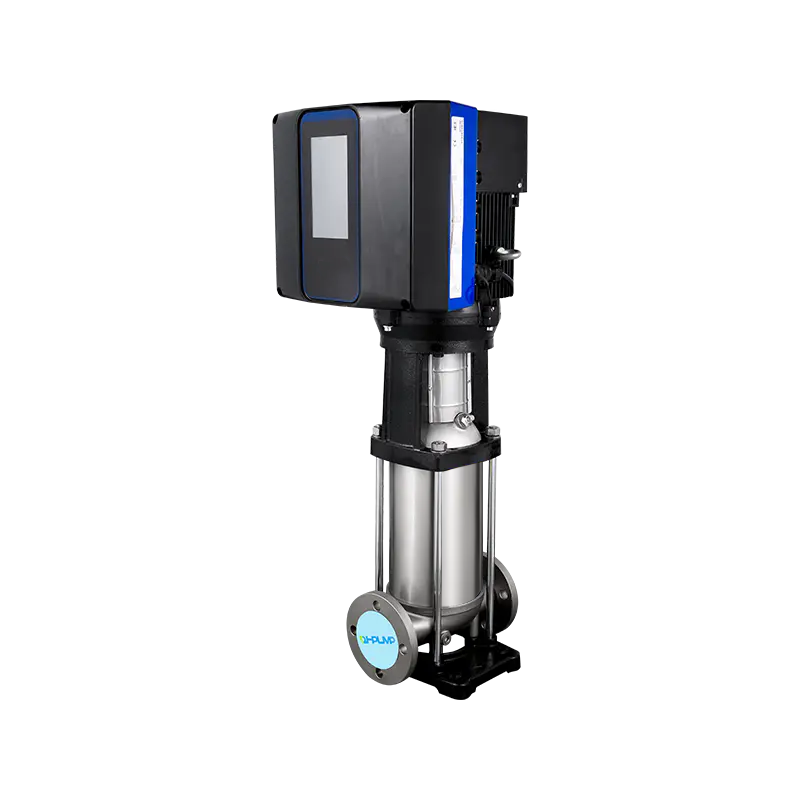
Intelligent variable frequency water supply equipment takes the core VFD pump concept and integrates it within a fully automated, microcomputer-controlled platform designed to manage constant pressure water supply across complex distribution networks. The system operates on a closed-loop control principle: a pressure sensor installed at the water consumption point continuously monitors the actual line pressure and transmits this data to the central microcomputer controller. The controller compares the measured pressure against the user-defined target setpoint and calculates the required correction in pump speed to eliminate any deviation.
When water usage increases—more taps are opened, more floors draw simultaneously, or a production process ramps up—the pressure at the consumption point begins to drop below the setpoint. The microcomputer immediately commands the VFD to increase the motor frequency, accelerating the pump and restoring pressure within seconds. Conversely, when consumption decreases, pressure would otherwise rise above the target. The controller responds by reducing motor frequency and slowing the pump, maintaining the setpoint without overshooting or pressure surges. This continuous feedback loop operates autonomously, requiring no manual intervention and responding to demand changes in real time.
In multi-pump configurations—common in large residential complexes or industrial water stations—the intelligent controller also manages pump sequencing. As demand grows, additional pumps are brought online in sequence; as demand falls, pumps are taken offline to avoid running multiple units at inefficiently low loads. This staged operation keeps each active pump near its Best Efficiency Point (BEP), maximizing energy performance across the entire load range.
Key Technical Features of Intelligent Variable Frequency Water Supply Systems
Modern intelligent variable frequency water supply equipment incorporates a comprehensive set of engineering features that address performance, safety, hygiene, and installation practicality simultaneously. These features collectively define the system's suitability for demanding real-world deployments.
Compact Structure and Minimal Footprint
The equipment is engineered around a highly integrated modular architecture, combining the pump group, pressure vessel, VFD controller, piping manifold, and electrical cabinet into a single skid-mounted unit. This compact structure dramatically reduces the installation footprint compared to assembling equivalent functionality from individual components, making it suitable for constrained plant rooms, basement pump stations, and roof-mounted water supply installations where space is at a premium. Installation is correspondingly simplified—the unit arrives pre-assembled and pre-wired, requiring only connection to the water inlet, outlet, and power supply to become operational.
Stainless Steel Construction for Hygiene Assurance
Both the water source tank and the pump group are fabricated from food-grade stainless steel, eliminating the risk of secondary water pollution that can occur with carbon steel or galvanized components subject to corrosion and internal coating degradation. This construction standard is particularly critical for potable water applications in residential buildings, hotels, hospitals, and public facilities where water quality must meet drinking water standards throughout the distribution system. Stainless steel surfaces resist bacterial biofilm formation, are easy to clean and sanitize, and maintain their integrity across decades of continuous service without leaching contaminants into the water supply.
Comprehensive Automatic Protection Functions
The intelligent controller incorporates a full suite of protection functions that monitor system health continuously and respond automatically to fault conditions. In the event of a malfunction, the system triggers visual and audible alarms, displays a diagnostic fault code on the control panel, and—where configured—transmits alerts to remote monitoring systems via digital communication protocols. This automatic fault detection and alerting capability ensures that maintenance teams can respond quickly to issues before they escalate into system failures, protecting both the equipment and the continuity of water supply to end users.
Energy Efficiency Advantages Over Fixed-Speed Pumping
The energy efficiency advantage of a VFD water pump system over a fixed-speed alternative is rooted in the Affinity Laws of fluid mechanics, which establish that pump power consumption varies with the cube of rotational speed. This means that reducing pump speed by just 20% reduces power consumption by approximately 49%. In a fixed-speed system, excess flow is typically managed by throttling control valves, which dissipates energy as heat and pressure loss across the valve rather than preventing the pump from consuming that energy in the first place. A VFD system eliminates this waste entirely by producing only the flow and pressure actually needed.
In real-world water supply applications where demand averages 50–70% of peak capacity across a full 24-hour cycle, energy savings of 30–50% compared to fixed-speed operation are routinely achievable. Over the operational life of a commercial water supply system, these savings represent a substantial reduction in total cost of ownership that typically delivers a return on the additional investment in VFD equipment within two to four years.
Applications: Where Intelligent Variable Frequency Water Supply Equipment Is Used
The versatility of intelligent variable frequency water supply equipment makes it applicable across a wide spectrum of water supply scenarios, from municipal infrastructure to specialized industrial processes. The following table summarizes the primary application sectors and the specific operational benefits the technology delivers in each context.
| Application Sector | Specific Use Case | Key Benefit |
| Water Treatment Plants | Distribution pressure management | Stable outlet pressure, reduced pipe stress |
| Booster Pump Stations | Network pressure boosting | Constant pressure across variable demand |
| Residential Communities | Multi-floor domestic water supply | Consistent pressure at all floors, energy savings |
| Hotels | Guest room and facility water supply | Silent operation, stable pressure for guest comfort |
| Large Public Buildings | Hospitals, schools, shopping centers | Hygiene compliance, demand-responsive supply |
| Industrial & Mining Enterprises | Process and domestic water supply | Precise flow control, reduced maintenance |
Selecting the Right VFD Water Pump System for Your Project
Choosing the appropriate VFD water pump configuration for a specific project requires evaluating several interdependent parameters to ensure the system delivers reliable constant-pressure performance across the full demand range of the application.
- Peak and average flow rate: Accurately calculating the maximum simultaneous demand and the typical average demand profile across a 24-hour cycle is essential for correct pump sizing and VFD selection. Oversizing the pump relative to average demand wastes capital; undersizing risks pressure deficits during peak periods.
- Required supply pressure setpoint: The target constant pressure must account for the static head of the tallest or most remote consumption point, plus an adequate safety margin. For multi-floor residential or commercial applications, this calculation must include the pressure required to serve the highest floor under full flow conditions.
- Number of pump units: Multi-pump configurations with intelligent sequencing control are preferred for applications with wide demand variation, as they allow individual pumps to operate near their BEP across all load conditions rather than running a single oversized pump at inefficient partial load.
- Water quality requirements: For potable water applications, specifying stainless steel wetted components throughout—including tank, pump casings, and pipework—is mandatory to prevent secondary contamination and meet applicable drinking water standards.
- Communication and monitoring requirements: Modern intelligent variable frequency water supply equipment supports integration with building management systems (BMS) and SCADA platforms via protocols such as Modbus or BACnet, enabling centralized monitoring, remote fault alerting, and historical data logging for performance analysis and predictive maintenance planning.
By carefully evaluating these selection criteria against the specific demands of your water supply project, you can configure a VFD water pump system within an intelligent variable frequency water supply platform that delivers consistent pressure, minimized energy consumption, robust protection, and decades of reliable service across whatever application environment it serves.

Recommended Products
It is focused on the overall solution of dry bulk material port transfer system,
research and development, manufacturing, and service

 English
-
 Factory Area 5-6, No. 1118 Xin'an Road, Nanxun Town, Huzhou City, Zhejiang Province
-
 +86-4008117388
-
 [email protected]
Copyright © Zhejiang Zehao Pump Industry Co., Ltd. All Rights Reserved. Stainless Steel Multistage Centrifugal Pumps Manufacturers

