


 English
 中文简体
中文简体 русский
Industry News
Home / News / Industry News / Self-Priming Sewage Pump: How It Works, Applications & Selection Guide

A pump that needs to be submerged to operate is also a pump that needs to be retrieved, dried out, and serviced in a confined, wet environment every time something goes wrong. For facility managers, municipal engineers, and industrial operators who deal with sewage, sludge, and wastewater on a daily basis, that trade-off has real operational costs. The self-priming sewage pump was developed precisely to address this — a surface-mounted, ground-level alternative that eliminates the need to place the motor in the waste stream while retaining the solids-handling capability that sewage applications demand. This article covers how these pumps work, the scenarios where they outperform submersible alternatives, what to look for in materials and sealing, and how to select the right configuration for your application.
Content
The defining characteristic of a self-priming pump is its ability to evacuate air from the suction line and draw liquid into the pump casing without manual filling between operating cycles. This happens through a continuous air-liquid mixing and separation process internal to the pump.
Before the first startup, the pump casing must be manually filled with liquid — this is the one-time priming step. Once that initial volume is in place, the impeller spins and creates a low-pressure zone at the inlet. The stored liquid mixes with air in the suction pipe, the mixture moves through the impeller and into a separation chamber, air is expelled through the discharge outlet, and the remaining liquid recirculates back to the impeller inlet. This cycle repeats until all air is purged from the suction line and a continuous liquid flow is established. From that point, the pump operates as a standard centrifugal pump.
Critically, after shutdown the pump retains liquid in its casing. On the next startup, this retained volume allows the self-priming cycle to restart automatically — without any operator intervention. This is what distinguishes a self-priming pump from a conventionally primed centrifugal pump, which would require manual re-filling after every dry stop.
Both pump types handle sewage effectively, but they suit different installation conditions. Understanding the trade-offs prevents costly mis-specifications.
A submersible sewage pump is placed directly in the waste pit and requires no suction piping. It occupies no above-ground footprint and works silently below the liquid surface. Its limitation is maintenance access: any service requires lifting the unit from the pit, which in a working sewage station means working with wet, contaminated equipment in a confined space. Motor seal failures — the most common failure mode — go undetected until the pump stops working entirely.
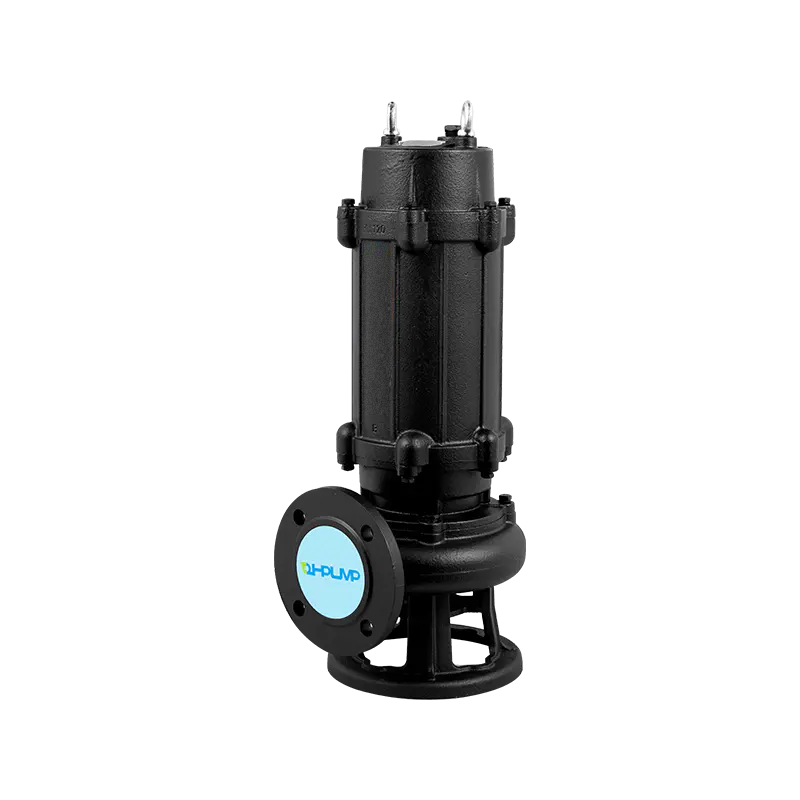
A self-priming sewage pump sits at ground level. The motor is completely separated from the sewage — only the pump casing, impeller, and suction pipe contact the waste stream. This means lower sealing requirements on the motor side, faster and cleaner maintenance access, and the ability to monitor the pump visually during operation. The trade-off is that suction lift is limited by atmospheric pressure, practically capping at 6–8 meters in most configurations. For applications where the liquid surface is deeper than this, submersible pumps are the practical choice.
For applications with moderate depth, intermittent operation, mobile deployment, or high maintenance frequency — construction site dewatering, industrial process water, municipal lift stations with accessible dry wells, and flood control operations — the self-priming configuration consistently delivers lower total cost of ownership over time, particularly for sewage pump applications requiring reliable solids handling at ground level.
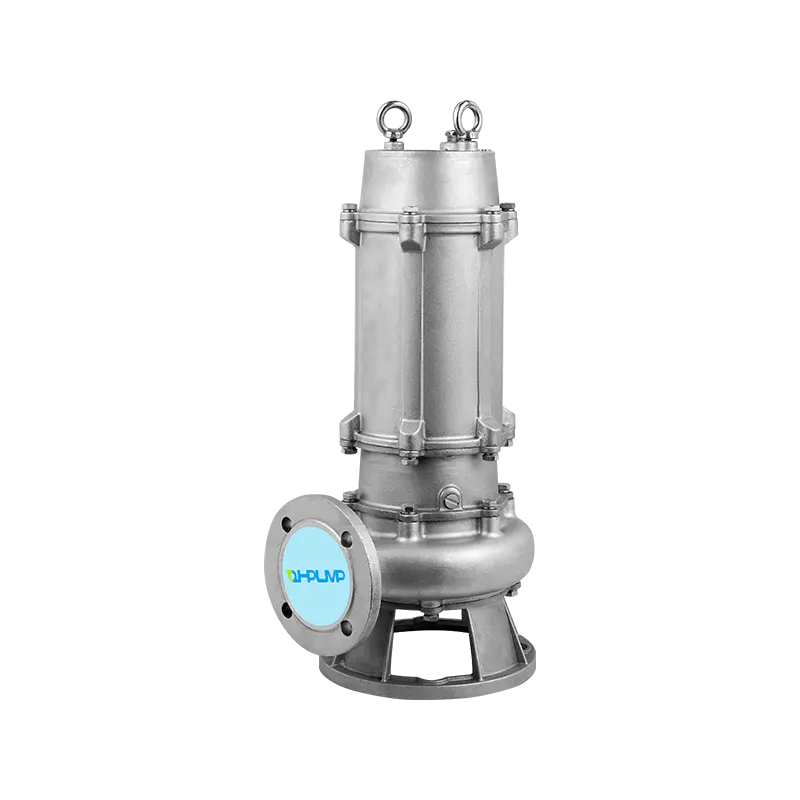
Self-priming sewage pumps cover a wider range of media types than most engineers initially assume. The common thread across all of them is fluid that cannot be handled by a standard clean-water centrifugal pump.
Sewage contains abrasive particles, fibrous material, and chemically aggressive components. Material selection for the pump casing, impeller, and sealing system directly determines how long the pump performs between maintenance intervals.
Pump casing: Cast iron remains the standard for general sewage applications — it offers good wear resistance, low cost, and proven durability in municipal and industrial environments. For applications involving corrosive wastewater, chemical effluent, or coastal installations, stainless steel casings (typically 304 or 316 grade) eliminate the corrosion risk that limits cast iron service life. Stainless steel precision-cast pump bodies also offer better dimensional consistency in the flow passages, which contributes to sustained hydraulic efficiency over the pump's life.
Impeller design: The impeller is the component most exposed to wear from solid particles. Single-channel or dual-channel open impellers with wide passages allow large solids and fibrous material to pass without blocking. Chrome iron or high-chromium alloy impellers (typically 55 HRC hardness) extend wear life significantly in applications with abrasive, sandy, or gritty sewage. For general municipal sewage without abrasive content, standard cast iron impellers with a corrosion-resistant coating are sufficient.
Mechanical seal: The mechanical seal is the critical interface between the wet end and the motor shaft. In self-priming sewage pumps, silicon carbide mechanical seals are the preferred specification for abrasive media — silicon carbide faces resist both the abrasion from fine particles and the chemical attack from acidic or alkaline waste streams. Oil-lubricated seal cavities provide additional protection during the brief dry-running period that occurs at each startup before the suction line is fully primed, preventing premature seal failure from heat buildup.
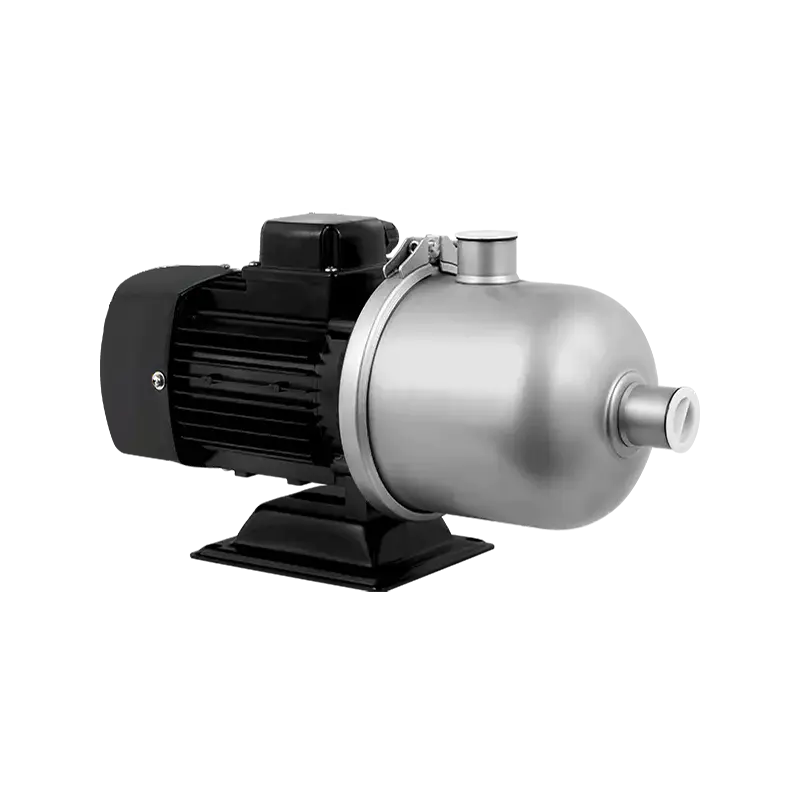
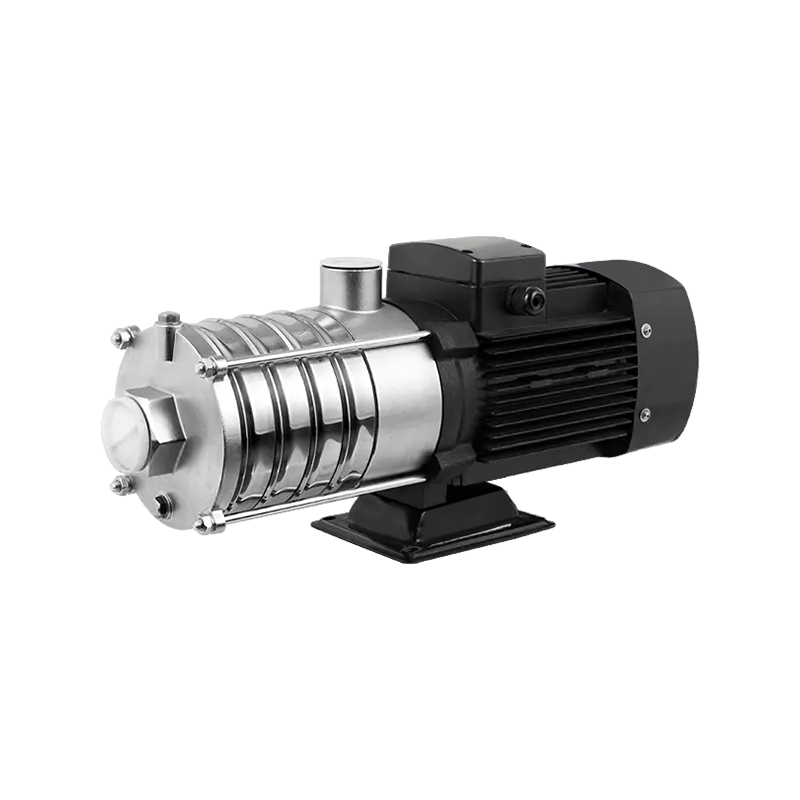
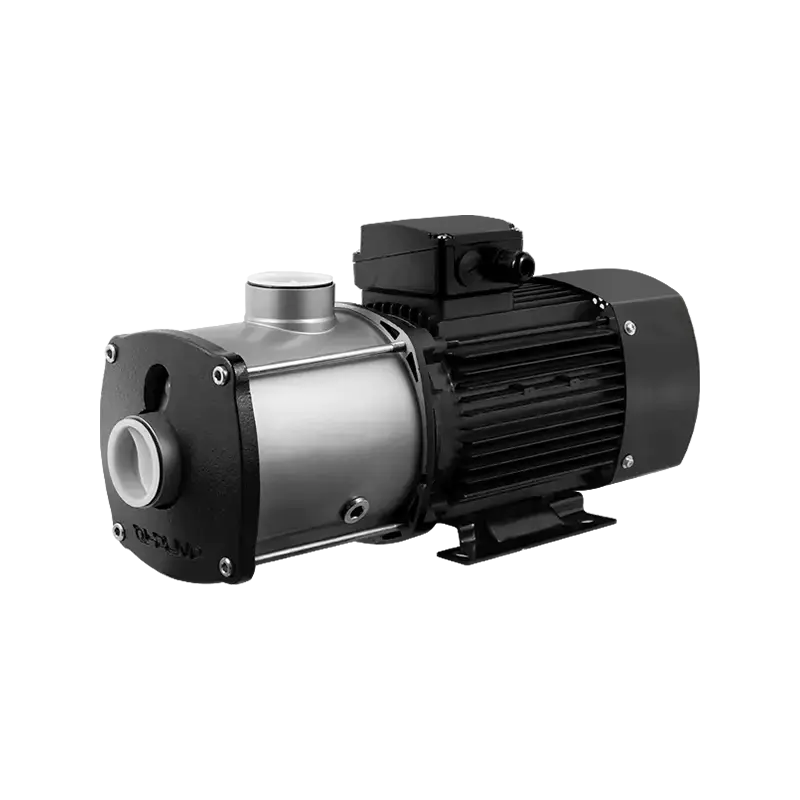
For operations requiring a broader pump solution — including both sewage handling and clean-water pressure applications — pairing a self-priming sewage pump with a horizontal multistage centrifugal pump for high-pressure clean-water circuits in the same facility covers both ends of the fluid handling requirement from a single supplier.
Getting installation right on the first attempt avoids the most common performance problems with self-priming pumps in the field.
The suction pipe is the most critical element. It must be airtight — any joint leak, loose coupling, or damaged gasket allows air to enter the system and interrupt the self-priming cycle, causing the pump to run dry. All suction pipe joints should be sealed with thread compound or gasket material rated for the media temperature and chemistry. Suction pipe length should be kept as short as practical; longer runs increase the air volume the pump must evacuate before priming is complete, extending startup time.
The pump does not require a foot valve for normal operation, since the retained liquid in the casing provides the priming reserve. However, in installations where long suction pipes create significant drain-back after shutdown, a foot valve at the suction inlet reduces the re-priming time on the next startup by keeping the suction pipe liquid-filled.
In cold climates, the water retained in the pump casing after shutdown must be drained before temperatures drop to freezing. Trapped water that freezes expands with enough force to crack cast iron casings — a preventable failure that occurs when winterization procedures are not followed. Most pump designs include a drain plug at the lowest point of the casing for this purpose.
Initial priming before first use is required regardless of pump model. Fill the casing through the priming port until liquid overflows, then close the port and start the pump. After the first priming cycle completes and the pump establishes flow, all subsequent startups are fully automatic.
Pump selection for sewage applications requires matching five parameters to the actual operating conditions — not to the maximum possible ratings on the product datasheet.
Flow rate and head are the starting point. Establish the required flow in cubic meters per hour and the total dynamic head (static lift plus friction losses in the discharge piping). The pump's performance curve must deliver the required flow at the system head with sufficient margin — operating at the far right of the curve, away from the best efficiency point, accelerates wear and increases energy consumption.
Solids passage diameter determines whether the pump will handle the actual waste stream. Municipal sewage typically contains solids up to 80 mm; industrial streams may carry larger fibrous material. The pump's maximum solid passage specification must exceed the largest solid expected in the media.
Suction lift requirement must be within the pump's rated capability — typically 5–8 meters for standard self-priming sewage pumps at sea level. Altitude reduces available atmospheric pressure and therefore reduces the achievable suction lift; applications at elevation above 1,000 meters should apply a derating factor.
Material compatibility with the media chemistry determines casing and impeller material selection, as outlined above. For applications where the pH, temperature, or chemical composition of the waste stream varies seasonally or with production changes, stainless steel construction provides a wider tolerance band than cast iron.
Motor protection class matters in outdoor and wet environments. IP55 rating is the minimum for most sewage pump installations; IP65 is recommended for outdoor stations without shelter. For facilities managing both pump specification and broader system integration, consulting with a manufacturer who offers a full range of centrifugal and sewage pump configurations simplifies the process of matching pump type to each circuit in the facility.
It is focused on the overall solution of dry bulk material port transfer system,
research and development, manufacturing, and service
 Factory Area 5-6, No. 1118 Xin'an Road, Nanxun Town, Huzhou City, Zhejiang Province
 +86-4008117388
 [email protected]
Copyright © Zhejiang Zehao Pump Industry Co., Ltd. All Rights Reserved. Stainless Steel Multistage Centrifugal Pumps Manufacturers




 English