


 English
 中文简体
中文简体 русский
Industry News
Home / News / Industry News / Sewage Pump Guide: Types, Selection Criteria & Applications | Zehao Pump

Roughly 80% of wastewater generated globally requires treatment before discharge — and at the center of every functional wastewater system sits a reliable sewage pump. Whether you are managing a below-grade basement bathroom, running a food-processing facility, or overseeing a municipal lift station, the pump you choose directly determines how efficiently and safely that waste moves. This guide walks you through how sewage pumps work, the major types available, how to size one correctly, and where each type performs best.
Content
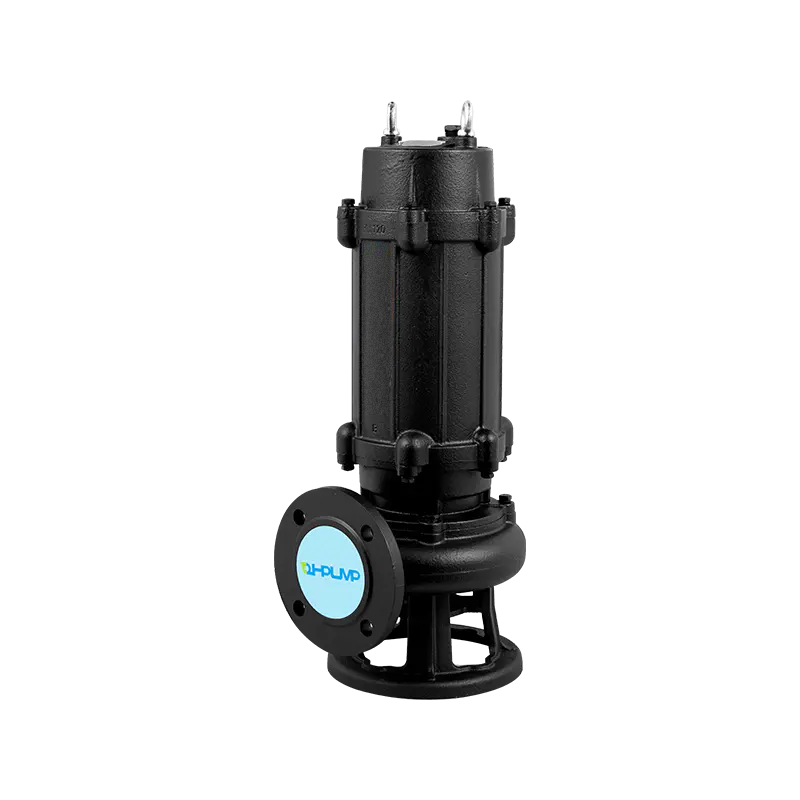
A sewage pump, also known as a drainage pump, is a heavy-duty core component of a sewage system, specifically engineered to handle and transport complex media containing solids, fibrous materials, wastewater, or slurry. It effectively lifts, transports, and discharges various types of sewage — solving a wide range of discharge challenges through built-in clog-prevention capabilities.
Known for their robust construction often utilizing cast iron or premium alloys, these pumps ensure exceptional durability and wear resistance even in heavy-duty plumbing tasks and harsh environments. To ensure corrosion resistance and prevent leakage, they typically feature advanced sealing structures — such as double mechanical seals — guaranteeing reliable operation when transporting viscous or solid-particle-laden wastewater.
The working principle follows a straightforward sequence: wastewater from toilets, sinks, and floor drains flows into a sealed collection basin. A float switch monitors the rising liquid level. Once water reaches a pre-set point, the float switch triggers the pump motor, which spins an impeller to generate centrifugal force, pushing waste upward and out through a discharge pipe — either to a gravity sewer line or directly to a treatment facility.
What distinguishes sewage pumps from standard water pumps is their ability to pass solid materials. Most residential units handle solids up to 2 inches in diameter; industrial or municipal models can manage significantly larger debris depending on impeller design. Our range of submersible drainage pumps for wastewater handling covers the full spectrum of these applications, from compact residential units to heavy-duty industrial configurations.
Not every sewage application demands the same pump. The four primary types each solve a specific problem — selecting the wrong one leads to premature wear, clogging, and higher maintenance costs.
These units are installed directly inside the sewage pit or wet well, operating fully submerged. The surrounding liquid cools the motor, eliminating the need for external cooling. Because they sit below the fluid surface, priming is automatic — removing a significant maintenance step. Submersible pumps excel in continuous-duty applications: residential basements, commercial sumps, underground tanks, and any installation where compact vertical footprint matters. They handle moderate-to-large solids and are well suited for flow rates ranging from dozens to several hundred cubic meters per hour.
Where submersible pumps pass solids through, grinder pumps shred them first. Integrated cutting blades reduce solids — including materials like rags, wet wipes, and fibrous waste — into a slurry fine enough to travel through narrow-diameter pressure mains. This makes grinder pumps the correct choice for low-pressure sewer systems, remote building connections where long, small-bore pipes are unavoidable, and any site regularly dealing with non-standard flushed materials. The tradeoff is mechanical complexity: the shredding mechanism requires periodic inspection.
Self-priming designs install above the liquid surface, automatically drawing fluid upward without manual priming each cycle. They are favored in applications requiring frequent dry-running periods or sites where dropping a pump into a pit is impractical. A built-in float switch automates start and stop sequences, making these systems largely hands-off. Common installations include portable dewatering rigs, irrigation drainage, and above-ground industrial process lines handling solids-laden slurry.
Ejector pumps are the standard solution when below-grade plumbing — a basement bathroom, a laundry room, or a commercial kitchen drain — must discharge upward to a main sewer line that sits at a higher elevation. They collect raw sewage and soft solids in a sealed basin, then eject the contents under pressure. Most residential ejector systems pair a 0.5–2 HP motor with a vortex or semi-open impeller. When the waste stream includes particularly tough solids that might bind a standard ejector impeller, a grinder pump is the preferred alternative.
Once you have identified the pump type, three technical parameters drive the sizing decision. Getting them wrong — even slightly — produces a pump that either cycles too rapidly (damaging the motor) or can never keep pace with inflow.
Flow rate is determined by the number and type of plumbing fixtures feeding the system. The fixture-unit method assigns weighted values to each fixture — a toilet, sink, shower, and floor drain each contribute differently. Summing those units and cross-referencing against published conversion tables gives the design flow in gallons per minute. For residential installations, a single-bathroom basement setup typically requires 30–60 GPM; multi-bath or commercial configurations scale upward from there. The pump's performance curve must meet or exceed that design flow at the required head.
TDH combines static lift (the vertical height waste must travel from the pump inlet to the discharge point) with friction losses through pipe fittings, valves, and horizontal runs. At design flow, a minimum pipe velocity of 2 ft/s is required to keep solids suspended; 3–5 ft/s is preferred. If velocity falls short, reduce pipe diameter or increase flow. With design flow (GPM) and TDH established, plot both values against the manufacturer's pump curve and select a unit whose curve passes at or just above that operating point — targeting the middle of the curve avoids both cavitation and short-cycling.
Confirm the maximum solid diameter the pump must pass and match it to impeller type. Vortex impellers create a rotating fluid column that carries solids through with minimal contact — ideal for fibrous or rag-heavy waste streams. Semi-open channel impellers provide higher efficiency for relatively clean wastewater with occasional small solids. Cutter or grinder impellers are reserved for applications where solids must be reduced before entering the pipe. Material selection for the pump body and impeller — cast iron for standard applications, duplex stainless steel for corrosive or saline environments — determines long-term wear resistance. For guidance on complementary pumping solutions, our horizontal end suction pump options cover process applications where single-stage centrifugal performance is the priority.
Sewage pump requirements vary considerably between sectors. The same underlying hydraulic principles apply — but flow volumes, solid types, corrosiveness of media, and regulatory requirements shift the specification substantially.
| Sector | Typical Application | Recommended Pump Type | Key Consideration |
|---|---|---|---|
| Residential | Below-grade bathrooms, basement drains | Submersible or ejector | Float switch automation, noise level |
| Commercial | Restaurant kitchens, hotels, car washes | Submersible (heavy-duty) or grinder | Grease tolerance, continuous-duty rating |
| Industrial | Process water, slurry transfer, mining | Self-priming or submersible (corrosion-resistant) | Abrasion resistance, explosion-proof motor options |
| Municipal | Lift stations, treatment plant influent | Submersible (large-bore) or self-priming | Redundancy, remote monitoring, energy efficiency |
Municipal lift stations represent the most demanding end of the spectrum. These facilities run continuously, must handle unpredictable solid loads, and are subject to national discharge standards governing what enters publicly owned treatment works. For a comprehensive overview of those regulatory requirements, the U.S. EPA's resources on municipal wastewater management provide authoritative technical guidance on permitting and performance benchmarks.
For a deeper look at how different pump configurations perform across these scenarios, the industry news on pump technology section of our site covers installation case studies and application-specific performance data.
Even a correctly specified pump will underperform if the installation cuts corners. Three areas account for the majority of premature failures in field installations.
The collection basin must hold enough volume to prevent short-cycling — motors that start and stop faster than roughly four times per hour overheat and wear prematurely. A rule of thumb: basin drawdown volume should equal three to four times the pump's per-minute flow rate. For a standard residential ejector running at 60 GPM, that implies a drawdown capacity of at least 15–20 gallons between float switch activation and cutoff.
Always install a check valve on the discharge side to prevent backflow into the basin when the pump shuts off. Without it, returning wastewater re-triggers the float switch immediately — creating rapid cycling that shortens motor life. Pipe sizing should maintain 2–5 ft/s velocity at design flow. Reduce diameter if necessary to maintain scouring velocity, but confirm the resulting friction head increase doesn't push TDH beyond the pump's curve.
Inspect the float switch quarterly — debris accumulation is the most common cause of pump failure to start. Clean the pump inlet and impeller annually, or more frequently in applications with heavy fibrous content. Check mechanical seals and wear rings every two to three years depending on duty cycle. For double mechanical seal configurations — standard on most industrial submersible models — monitor the seal chamber oil condition; cloudy or milky oil indicates water ingress and requires immediate seal replacement before the motor winding is compromised. Maintaining a log of each pump's run hours, cycle frequency, and power draw makes it straightforward to detect performance degradation before it becomes a failure.
It is focused on the overall solution of dry bulk material port transfer system,
research and development, manufacturing, and service
 Factory Area 5-6, No. 1118 Xin'an Road, Nanxun Town, Huzhou City, Zhejiang Province
 +86-4008117388
 [email protected]
Copyright © Zhejiang Zehao Pump Industry Co., Ltd. All Rights Reserved. Stainless Steel Multistage Centrifugal Pumps Manufacturers





 English